

Would you like to consider how to explore a dimension of your life you’ve likely not given much attention to until now? If so, let’s look at the dreams you have every night while you sleep, to see how such dreams might play a part in nurturing your spiritual health.

Empirical studies demonstrate that most people dream regularly, but only a small number of individuals pay attention to their dreams. Those who do pay attention usually do not try to interpret them or record them for insight or future reference.
Before we go further, we need to understand why, in our culture, most people don’t consider their dreams a significant part of their lives.
One reason many Americans overlook their dreams is cultural conditioning. In a society that prizes productivity, logic, results, and measurable output, dreams often seem too vague or impractical to be worth our time. After all, if success means mastering a craft, making an impact, or “getting ahead,” then ambiguity and inner wandering don’t cut it. Another issue is our society’s obsession with the scientific method as the primary way to determine what is true or real.
The scientific method is built around forming hypotheses, testing them through controlled observations, and drawing conclusions from repeatable, measurable results. By design, this method struggles to account for deeply personal or subjective experiences produced by the dream process. As a result, many adopt the mindset: “If you can’t measure it or quantify it, it doesn’t exist.”
There’s also a built-in cultural bias toward the purpose of why we sleep. It’s viewed as a biological necessity, as the way to recharge the tired physical body and allow the physical brain to unwind from the busyness of a demanding workday. Sleep is seen as a means to an end, namely, that of supporting productivity and output during one’s waking hours. This is a utilitarian view of the sleep process that excludes dreams from having any meaningful value in one’s life.
This approach to sleep is like viewing one’s physical body, including its shape, size, and skin color, and assuming that’s all there is to a human being. It’s like judging a car by its paint job, without ever looking under the hood to see what makes it run.
In recent decades, dream science has revealed a great deal about what happens in the brain during sleep. Working with the most advanced tools available, scientists still cannot explain how we experience space, time, color, sound, emotion, and even unexpected insights while dreaming.
If you believe only physical matter is real and everything is explainable by physical processes, don’t worry, I’m not here to argue with you. You’re welcome to read this essay and take from it whatever you like. Or, if it strikes you as nothing more than a fart in the wind, that’s fine too. I’ll happily refund the money you didn’t pay to read it.
In all seriousness, is it possible our waking reality is only one slice of something broader and deeper we’ve not considered up until now? If so, what can one do to begin a process related to one’s dream world?
One can begin with a broad review of the literature on this subject, and also investigate individual anecdotal stories related to dreaming and its impact on one’s life. In one of my early essays on Substack, I share a significant dream I experienced about my favorite uncle, who unexpectedly passed away from brain cancer when I was in high school.
In the dream, I’m walking down a long, dimly lit hallway in an old office building. About one hundred feet in front of me, I see the outline of someone standing in an office doorway. As I draw nearer, I realize it’s a man dressed in a white T-shirt and baggy blue jeans. I suddenly recall this is how my dead uncle used to dress all the time. Getting closer, I can see that the man is indeed my dead uncle! I’m confused and startled.
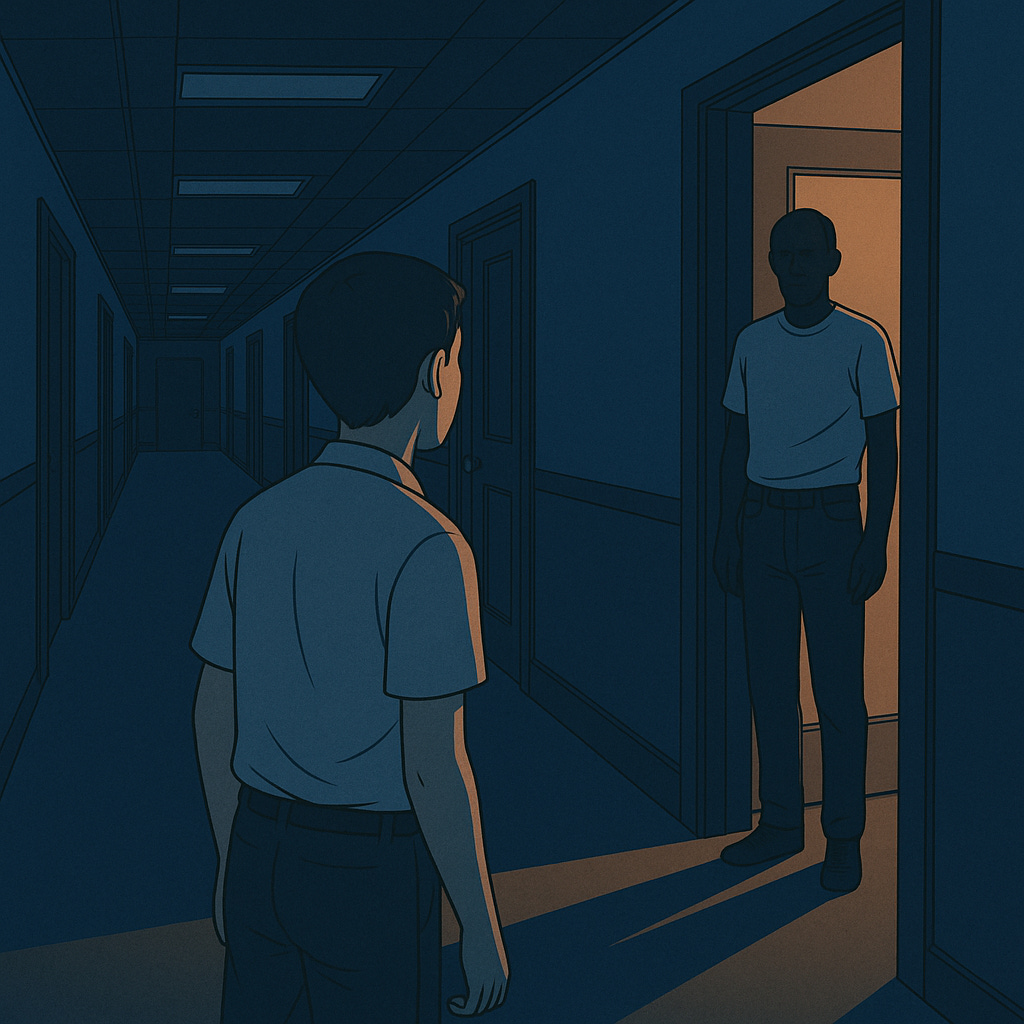
Suddenly, our eyes lock. In silence, we stand there, staring at one another. I’m drawn to the contours of his mouth. His lips appear to be pressed firmly together, and I get the feeling he is struggling mightily to say something to me, but he can’t open his mouth. What are you trying to tell me, Uncle? I hear myself cry out in my mind. The dream ends there. This dream had a profound impact on the trajectory of my life, from this moment forward. You can learn more details by clicking HERE to read the full essay.
Numerous books have been published on dreams, dreaming, and how to experience a dream life, from both secular and sacred perspectives. Matthew Walker’s 2017 book, Why We Sleep: Unlocking the Power of Sleep and Dreams, is a neuroscientific, evidence-based account of sleep. The 2024 book, Dreamwise: Unlocking the Meaning of Your Dreams, authored by three Jungian analysts, looks at the dream world through the lens of inner exploration, personal growth, and symbolic meaning.
If there is something to the idea of a dream world that wants to interact with us, making an effort to understand this dimension of our life might lead to unexpected or surprising outcomes.
💬 Have You Had a Dream That Won’t Let You Go?
We’d love to hear about it.
Share your dream in the Comment Section below.
Or, if it feels personal, message Jack privately through the One-on-One Conversations portal at everydayspiritualhealth.com
To get started immediately, here’s a simple guide to help you.
INTENTION: Create a specific intention for this practice that you can refer to often, like: I intend to consciously enter the dreamworld with openness, humility, and readiness to receive what the deeper wisdom of life is offering.
SHIFT TO RELAX MODE: Give yourself a few minutes to slow down. Put away your phone. Use silence or soft music to help make the shift.
GROUNDING ACTIVITY: Use a grounding activity such as washing your face and hands, or gently breathing, and repeat: I cleanse the day from me. I release all I carry that is not mine to bear.
PHYSICAL RELEASE: Lightly stretch or breathe deeply into your belly and repeat: I soften into rest. My body is no longer needed for striving.
Write down a grounding ritual phrase you can slowly repeat to yourself. Here’s an example: I now cross the threshold from waking to dreaming, leaving behind the noise, the effort, the burdens of daylight. Tonight I enter the dreamworld with reverence, asking nothing but to be shown what wants to speak. I offer my sleeping self to the greater wisdom of life.
Here’s an Amazon link to look at a DREAM REMEMBRANCE JOURNAL. You will need a way to record your dream impressions, and this kind of journal helps by providing specific prompts you can use. Keep the journal nearby, or use your phone for a digital voice recording you can later transcribe, if you like.
Start tonight. If nothing comes through, no worries. You can record this fact and consider it part of the process.
What if your dreams aren’t just random noise or misfiring neurons, but instead, messages from a deeper part of you, or from something greater than you?
You don’t need to solve the mystery of your dreamworld all at once. Just begin by paying attention. Keep a journal, notice patterns, or lie down at night with a little more wonder before you lazily drift off to sleep.
You might be surprised at what you encounter while you sleep.
Good luck, and I’d love to hear about any progress you make.
I heard dreams were something to the effects of: processing life experiences through drama. I find this subject fascinating. A well written Essay indeed.