

During a recent conversation with my oldest son, a successful entrepreneur, he noted that the increasing application of AI in the work environment demands higher levels of output and productivity. Shall we have some fun here and say: “Produce or vamoose!”
Whether in the workplace, family relations, a romantic relationship, a competitive sport, or inside a casket at your future wake, how do you envision you will be seen—for who you are, for what you did, or a combination of both…?
Naturally, at times, it is more important to be seen for doing, right?
Suppose I need a brain operation to survive. Do I pick a brain surgeon who has operated only on cats in my local neighborhood, or one who has successfully performed hundreds of brain surgeries on human beings with a 98% success rate?
So yes, there are times when what we do is more important than being fully seen. But those actions are most meaningful when they are rooted in the deep, inner essence of ‘I know who I am on the inside,’ identity, not when used to prove one’s identity.
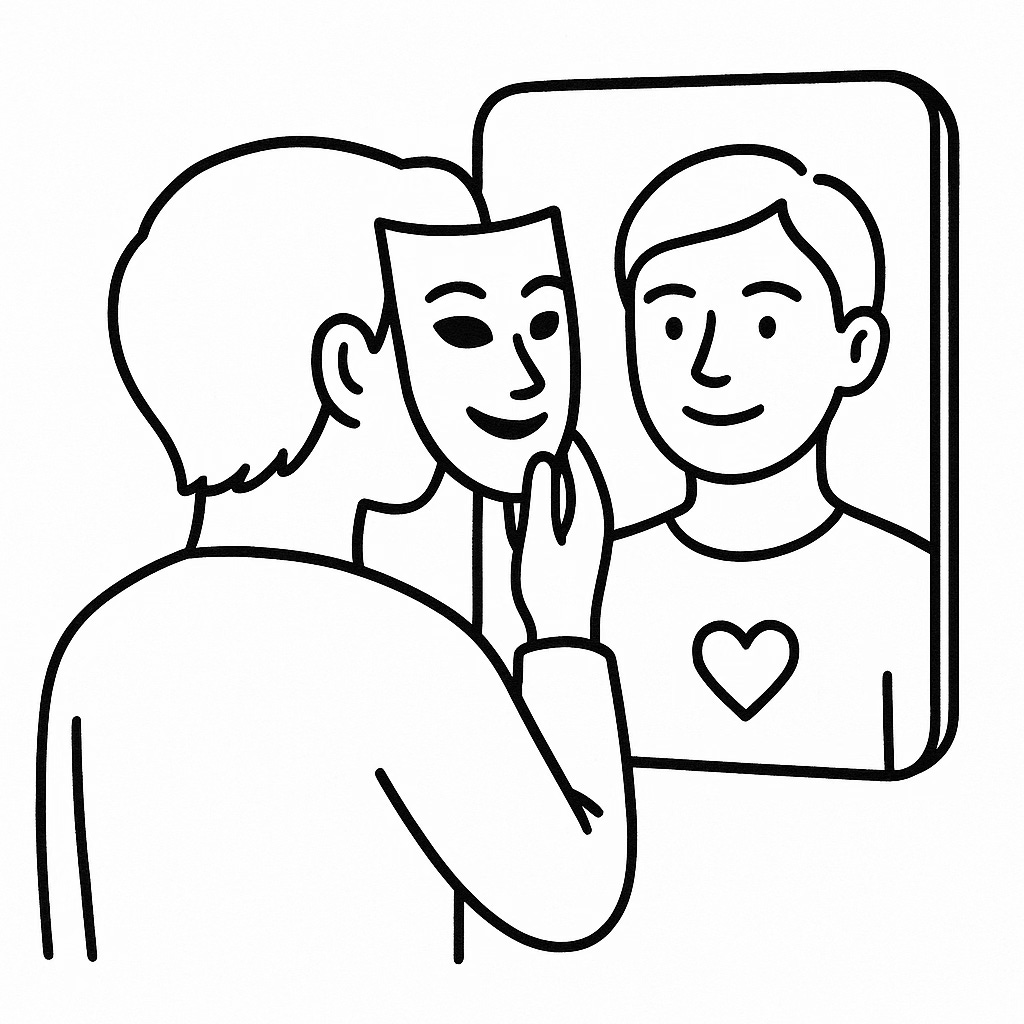
Being accepted for who you are, in essence, not for your image, role, or resume, is likely a key ingredient to emotional resilience, deep connection, and an overall sense of inner well-being.
While cultures differ in their consideration of the importance of doing and being, the core human need to be seen for who we are, beyond our roles and results, remains constant.
Modern-day Western societies, such as America, England, Germany, and France, tend to condition us to earn worth through action and performance, each finds its way to create space to see oneself as “being enough,” beyond the noise, striving, pushing, and overcoming.
Societies may condition us to see our worth through the lens of accomplishments, output, and productivity. Spiritual health invites us to reclaim our worth by reminding ourselves that we are already enough and always have been, even before we were born.
Everyday Spiritual Health grows through conversation. What insight or questions did this essay stir in you? Share your voice below.
"I know who I am on the inside." A good mantra for today. Thanks!