

When I woke up this morning, I put a heating pad on my right knee. For the past three months, caring for this knee has quietly become one of the first things I do after getting out of bed.
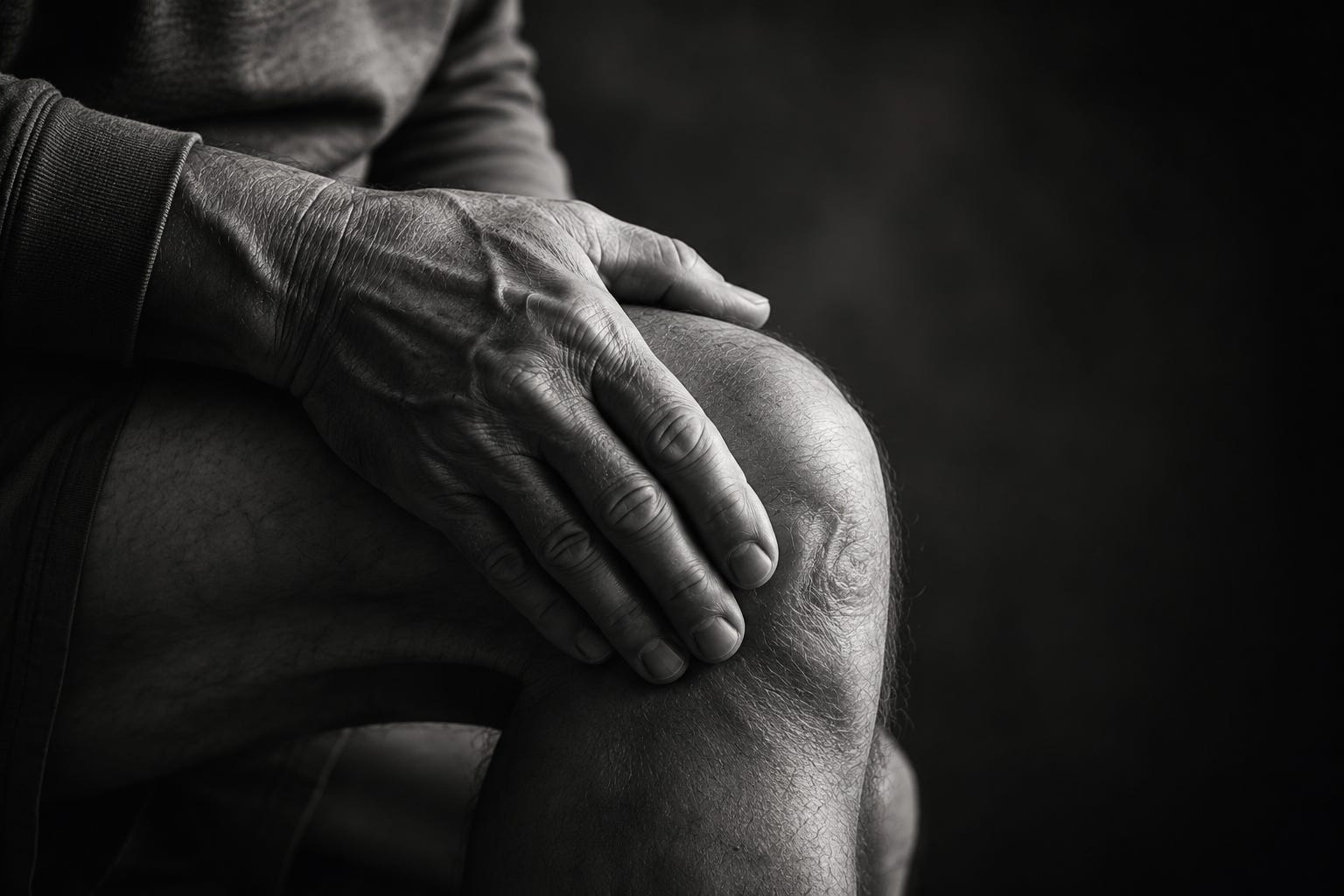
But the story of this knee is much older than three months. It goes back to 2021, when swelling and discomfort finally brought me back to my knee doctor.
“Your knee,” he said, directing my attention to the X-rays on the screen, “shows signs of osteoarthritis. The degree of cartilage degeneration is more severe on the inside of the joint, and that’s likely where your discomfort is coming from. Because you’re not in significant pain right now, I’d be careful not to place too much stress on it, and if it gets worse, come back and see me.”
I trusted what my doctor told me. He came highly recommended by a close friend. At the time, I knew little about the inner workings of the knee.
The diagnosis worried me. This same doctor had already performed total knee replacement surgery on my left knee two years earlier. The first few weeks after that surgery, my wife had to wait on me hand and foot. It took nearly six months before I trusted the knee enough to return to work.
I didn’t want us to go through that experience again.
Unfortunately, my fears began to grow. Gradually, walking became increasingly difficult. With nearly every step, I felt a stabbing pain at the center of my kneecap. If you can imagine a hundred sewing needles clumped together, jabbing straight into your knee and then retracting, that’s what it felt like each time my foot hit the ground.
It seemed like my knee had a mind of its own, functioning according to its own logic, and there was little I could do about it. Before all of this, I just assumed my knee would always function smoothly. Now it had become something I constantly had to contend with, no longer silently cooperating.
All I knew was that I wanted the pain to go away. I feared I was slowly heading toward another knee replacement, and I felt helpless.
As all of this was happening, I kept recalling two earlier injuries to the knee, both of which I had pushed past without ever really dealing with them. At that time, my attitude toward doctors was to stay away from them as much as possible.
Both injuries resulted from my martial arts practice. The first injury frightened me more than anything else. During judo practice, my partner threw me in a way that rapidly twisted my right knee counterclockwise. As the knee twisted, I heard clicking and felt popping across the middle of the joint. My mind raced: What the hell just happened? As I hit the mat, I wondered if I’d be able to stand back up and walk.
To my surprise, I was able to get off the floor and move around without any pain or discomfort in the knee. I was shocked and relieved. As far as I was concerned, since there was no pain, no real injury had occurred, and I simply carried on with the remainder of the practice.
The second injury happened years later during a self-defense class. My instructor was demonstrating a judo sweep, and I landed forcefully on the inside of my right knee. Upon impact with the mat, a piercing pain shot through the inside of the joint, as if the tip of a sword had penetrated deep into the knee.
Unlike the earlier incident, this time, as I picked myself up, a hot, burning sensation flooded the inside of my knee, and when I stepped forward, sharp pain pulsed through my knee. Embarrassed more than anything else, I tried to ignore what had just happened and gutted out the rest of the practice as best I could. But I knew an injury had occurred.
For several days, I could hardly put pressure on the knee, walking with a slow, deliberate limp. Gradually, the pain went away on its own, and I was able to resume my practice. It felt like the knee had completely healed.
From the beginning of my training, I could feel the stress certain kicks and judo throws placed on my knees. I always pushed through the discomfort and pain anyway. Martial arts became part of my professional training while working in executive protection for high-profile individuals. At the time, I had made up my mind that if my knees ended up worn out or damaged down the line, that was a price I was willing to pay.
For the next three years, my knee became something I had to think about all the time. Simple activities like going for a walk or meeting up with people in public places were always accompanied by this nagging pain with every step I took. Constant swelling and a lingering sense of heaviness in the knee became an unwanted companion. I could no longer run, and sitting cross-legged on my meditation cushion became increasingly painful.
What I couldn’t see at the time was how completely I had adapted to living with the knee. I no longer expected the pain to go away. The discomfort became part of my everyday experience, something I quietly and reluctantly accepted. My knee became more like a separate part of my body, always demanding attention and limiting my comfort with nearly everything I did.
There was no way I was going to go back to my knee doctor for another X-ray. I did not want to hear that another knee replacement was only a matter of time. Looking back now, I cannot remember making any real effort to strengthen the knee or improve what was happening until one day last year, when I had a conversation with my oldest son about it.
After dinner one night, as we talked about what I could do for the knee, he suggested, “Before you get too old, why don’t you have the surgery done? You might be prolonging the inevitable, and the longer you wait, the longer it will take you to recover. The surgery you had on your left knee was successful, and it seems to have solved the problem. Why not just get it done?”
His suggestion was sound and based on the fact that my surgeon had taken a severely compromised knee and replaced it with one that functioned normally again. I went from limping around like Chester on Gunsmoke to what now feels like a normal knee again. Yet, something in me resisted his suggestion.
About a year earlier, I came across several well-known studies involving patients with chronic knee conditions facing surgery as a last resort. The patients were led to believe that surgery had been performed on them when, in fact, it had not.
In some cases, patients who were given these sham procedures reportedly improved. These reports raised questions about the role of expectations, beliefs, and the mind in pain and healing. At the time, though, my interest remained mostly intellectual. I was fascinated by the possibilities these studies pointed toward, but never seriously considered how my situation might improve if I actually applied some of the ideas they were exploring.
During a recent visit to my son’s house to see our newborn grandson, he suggested I check out a professional sports medicine facility to see how they might help with the knee. I found myself immediately getting excited about the possibility, even though I had never seriously pursued anything like that before.
The following week, I found myself at this facility. I remember standing there in front of the kinesiologist, pointing to my swollen knee. After explaining the history of the knee, he hooked me up to three different machines for ten minutes at a time, telling me these treatments could help increase blood flow, reduce swelling, encourage healing, and loosen scar tissue. At the end of our session, I could see the swelling had gone down a lot, but the sharp, shooting pain was still there with each step.
I returned four more times over the next few weeks. By the time my wife and I were ready to return home, the swelling seemed to be under control, and on occasion, while walking around during the day, I’d suddenly realize that I was walking and the knee felt almost normal.
The first time I experienced little or no pain in the knee, it was a shock. I’d gotten so used to walking around in a constant state of nagging pain that suddenly being without it seemed almost alien.
YouTube videos explaining the mechanics of the knee became an important part of learning about how the joint functions and responds to injury and trauma. As I learned more about the intricate relationship between muscles, ligaments, bones, cartilage, and nerves, it felt like discovering an unexplored world inside my own body.
The more I watched, the more I found myself marveling at what it actually takes for our knees to function properly. I began to realize how much I’d taken for granted what my knees had quietly done for me over the years, and also how my lifestyle and habits may have contributed to their deterioration.
As the knee slowly began responding, I found myself relating to it differently. While walking, I’d quietly talk to the knee, sometimes imagining it moving smoothly with each step. During rehab exercises, I began paying close, gentle attention to how the joint actually functioned, how muscles, tendons, and movement all worked together. Somewhere along the way, this evolving relationship with my knee deepened into a growing appreciation for the remarkable complexity and quiet intelligence of the human body.
Today, my knee feels lighter with less discomfort and pain. That’s today. I’m not sure what tomorrow will be like.
Whether my knee will continue to improve or eventually require surgery is not of primary concern right now.
What stays with me most through all of this is the mystery of how debilitating or life-threatening conditions can slowly or suddenly emerge, often without us even noticing what has been building beneath the surface for years.
Perhaps by learning to pay attention and listen more carefully to what our bodies may be communicating through pain, tension, fatigue, limitation, or even silence, we may discover ways of living with greater care and attentiveness.
Interesting evidence of auto-suggestion.