

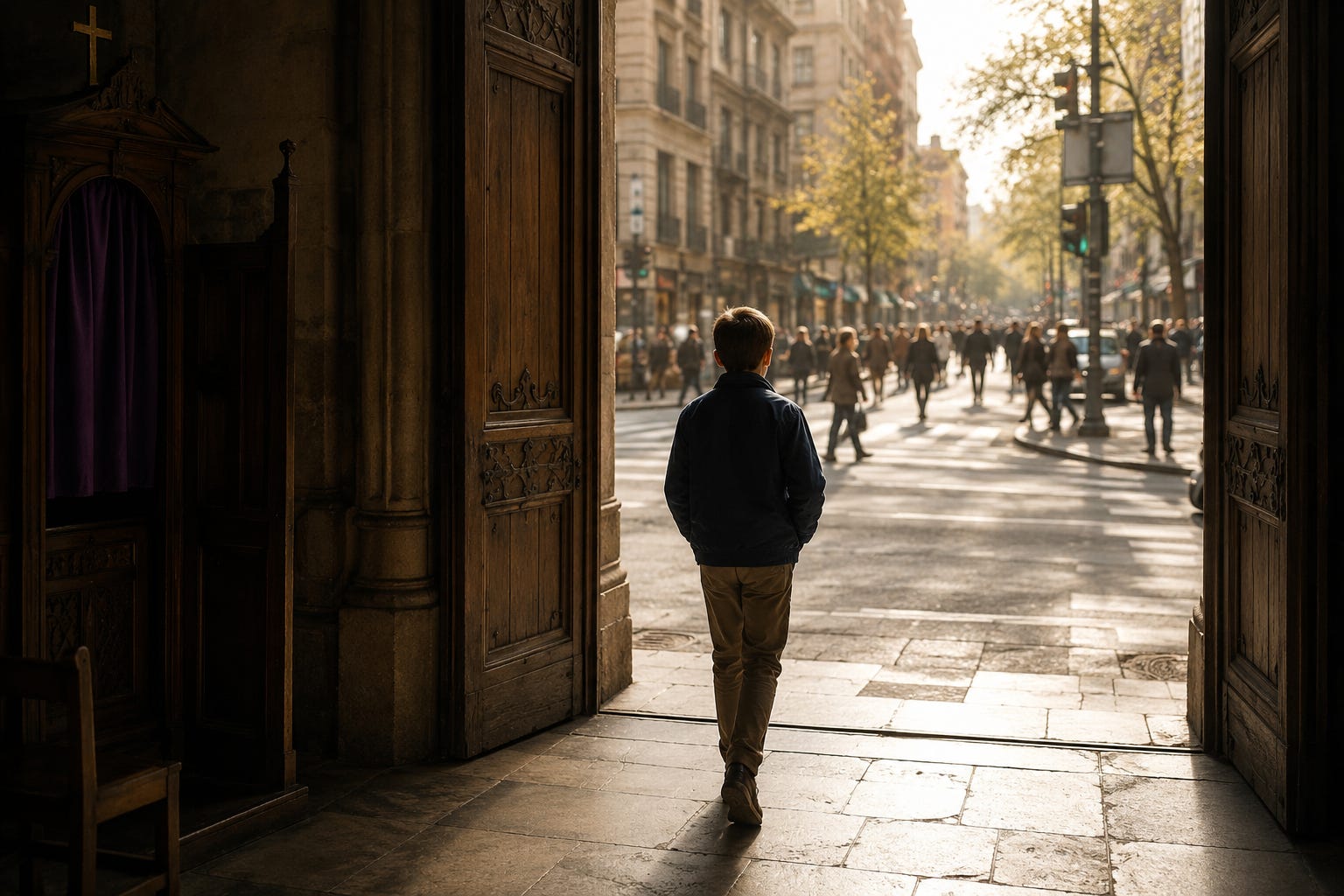
Growing up in the Catholic tradition, I was taught that I was a good person because God created me and loves me, but I also shared a wounded human nature that sometimes led me to choose wrongly and commit sin.
We were taught to examine our conscience: What did I do? Did I lie? Did I disobey my parents? Was I mean? Did I steal? Did I use God’s name improperly? Did I miss Mass?
I felt loved by God, and at the same time, conflicted about my tendency to not live up to what it meant to be a good Catholic boy: upright, honest, obedient, loving, and caring. Going to confession on Saturday afternoon allowed me to tell the priest what I’d done wrong and to ask forgiveness for any sins I’d committed during the week.
What strikes me now is how uncomplicated and satisfying this weekly confession routine was for me as an elementary school boy.
In my experience, I wasn’t entering the confessional wondering what was wrong with me or where my troubling thoughts and behavior came from. That had already been explained. I was a human being living with the consequences of the Fall and, like everybody else, capable of sin and in need of God’s forgiveness. My job was to look closely enough at myself to identify where I had done wrong, own up to it, and be reconciled.
After receiving absolution from the priest and reciting my assigned prayers, I’d step out of the church into the normal, noisy world, usually feeling lighter, relieved, and thankful for another chance to make good on my promise to obey God’s rules for being an upright Catholic boy.
Looking back, what strikes me is that I wasn’t being asked to understand why I had done what I’d done. The priest wasn’t helping me uncover something about myself that I hadn’t yet discovered. I brought something specific into the confessional, named it, and received something specific in return: forgiveness from God through the priest.
The questions we ask ourselves are more complicated now. Gradually, the question I had been taught to ask, What have I done?, was joined by others. Why did I do it? Where did that feeling come from? Why do I keep repeating the same bad behaviors? Is there something within me I don’t yet understand? What’s wrong with me?
Over time, our understanding of what troubles us expanded beyond ideas about right and wrong. Questions about our feelings, motivations, relationships, past experiences, and aspects of ourselves outside our conscious awareness now take a central role in trying to understand who we are, why we suffer, and why we do what we do.
Today, looking inward has become one of the primary ways we try to understand ourselves and find relief from what troubles us. We are encouraged to understand our patterns, process our experiences, heal our wounds, and work toward becoming healthier versions of ourselves. There is much in this that can be helpful. But it also introduces a very different way of experiencing ourselves.
If I need forgiveness, I have done something wrong. If I need healing, I have been wounded. If I need repair, something in me is not working as it should. Each begins with an understanding of what is wrong before the remedy begins. [In my previously published essay, I wrote more about what it actually feels like to live inside that logic of woundedness—the particular weight of it, the way it never quite closes.]
Perhaps the question worth asking is not only how we get better, but what we have come to believe about ourselves that tells us we need to get better in the first place.
What would it feel like, just for a moment, to set that belief down rather than examine it?
The beat goes on, or maybe not.